Spot the Signs: Four Early Warning Signs Your PPE Workwear Is Failing
When PPE starts to break down, teams notice it first on the job — not in a training manual. Small issues like thinning fabric or loose seams can turn into safety risks quickly, especially in environments where visibility, flame resistance or chemical protection matter every day.
Here’s what to look for so you can catch PPE issues before they become problems.
1) Loss of functionality:
When PPE fabric fades, thins or stops performing as designed, it can compromise protection and ANSI visibility requirements.
A closer look at high-visibility wear
Consider a high-visibility garment like the Rugged Flex® ANSI 2 Shirt built to meet ANSI Class 2 standards, which includes:
- 775 in² of fluorescent background material
- 201 in² of reflective striping.
Dirt, oil or grease, UV exposure can wear down those components. When neon fabric fades or reflective striping begins peeling or losing brightness, visibility drops. If your team has trouble spotting the garment from a distance or under work lighting, that’s a clear sign the garment is no longer performing to ANSI expectations.
Why fading is a safety risk
Overtime, fading neon material makes workers harder to see in conditions where visibility matters, such as:
- Low‑light areas
- Early mornings or late evenings
- Night work
- Heavy‑equipment environments
- Sudden weather changes
These environments rely on strong fluorescent color and reflective performance. Any loss in these areas can increase the likelihood of near‑misses or incidents.
Why this matters across all PPE
Loss of functionality affects every PPE category:
- Flame-resistant (FR) fabrics may lose flame‑resistant performance
- Chemical‑resistant materials can thin or weaken
- Insulated garments lose thermal protection
- Cut‑resistant fibers degrade over time
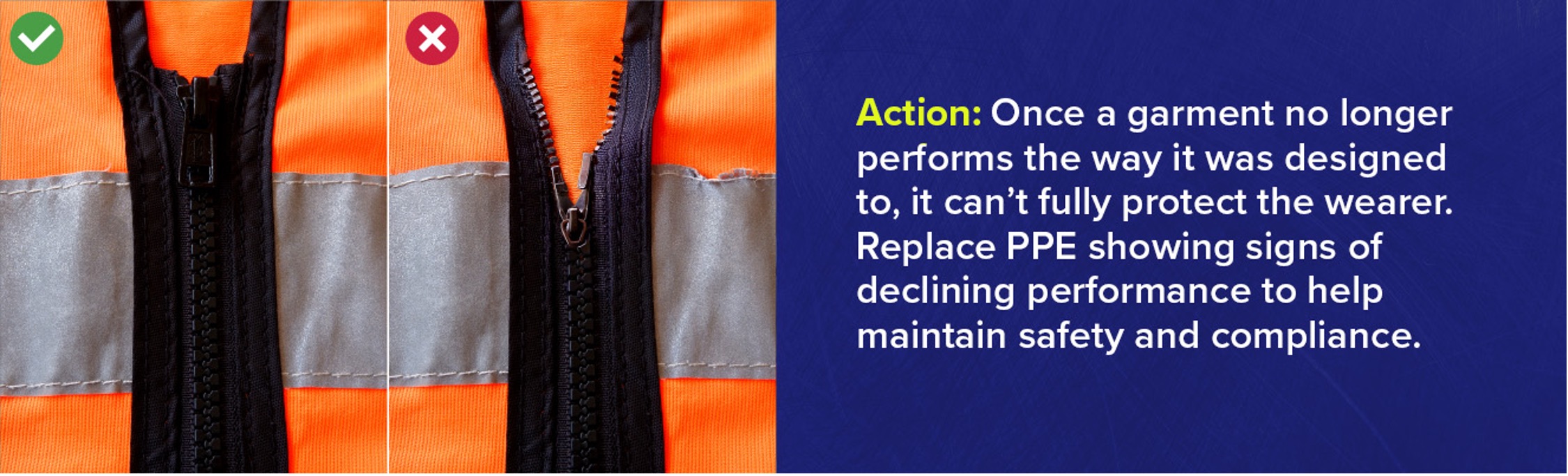
Action: Once a garment no longer performs the way it was designed to, it can’t fully protect the wearer. Replace PPE showing signs of declining performance to help maintain safety and compliance.
2) Damaged seams:
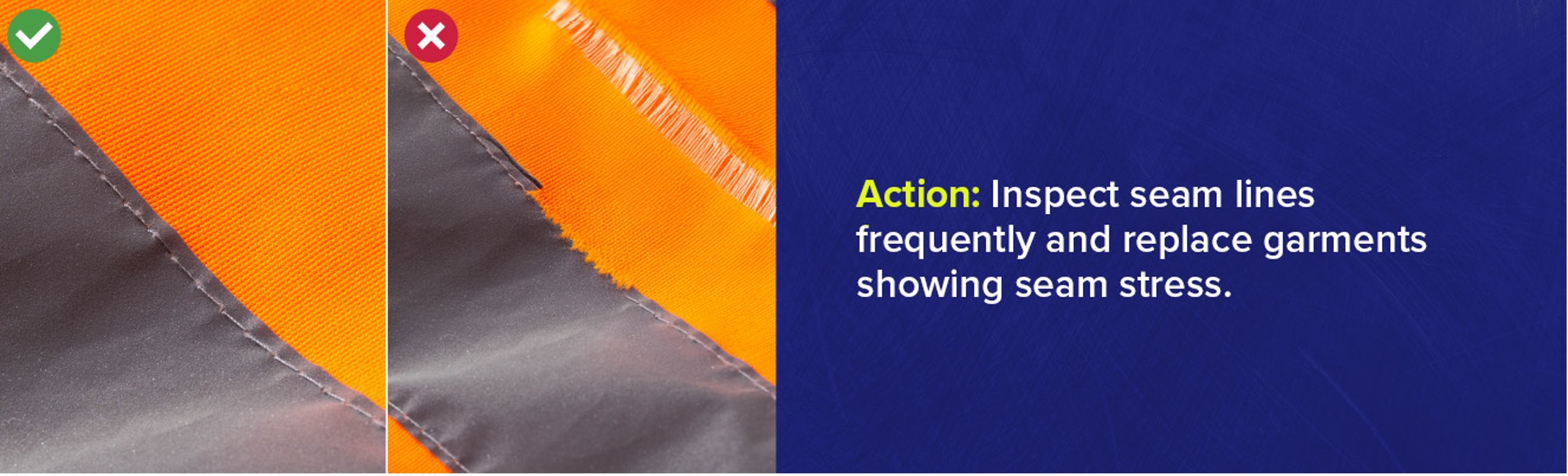
Seams take the most stress on any garment. When they break down, the garment’s overall integrity does too.
A closer look at high‑visibility wear
For high‑visibility apparel, seams aren’t just structural — they can impact compliance.
On ANSI Class 2 high‑visibility garments, a split seam can reduce the required fluorescent background area or interrupt reflective striping. Even a small gap can pull the garment out of spec, if your team notices:
- Fraying or loose stitching
- Seams pulling apart
- Reflective striping separating at the seam
Why this matters across all PPE
Damaged seams can:
- Expose skin to heat or flame in FR gear
- Create penetration points in chemical‑resistant PPE
- Reduce insulation in cold‑weather gear
Action: Inspect seam lines frequently and replace garments showing seam stress.
3) Rips, tears or holes:
Physical damage is an immediate sign that PPE is no longer providing full protection.
A closer look at high‑visibility wear
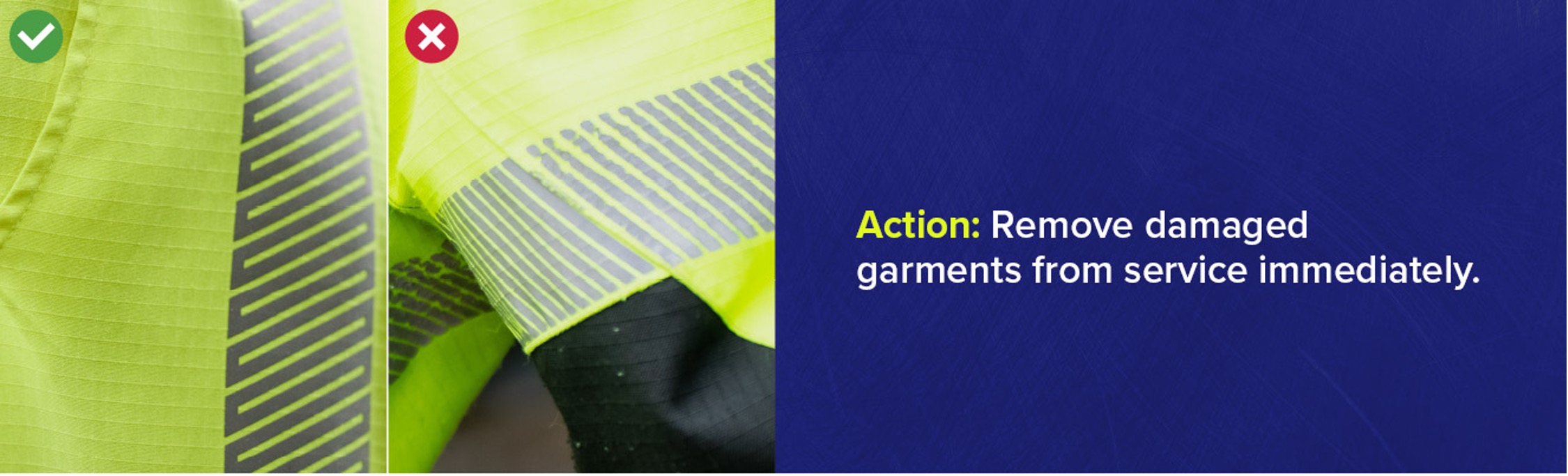
Tears reduce required fluorescent and reflective surface area. Even small holes in flex‑zones grow quickly, lowering visibility in low‑light or high‑traffic environments.
Look for:
- Small holes in high‑movement areas
- Tears created by tools, equipment or rough surfaces
- Reflective bands with cuts or missing sections
Why physical damage matters across all PPE
Damage reduces protection across all categories:
- FR gear loses flame‑resistant coverage
- Chemical‑resistant PPE can allow seepage
- Insulated garments lose warmth
- Cut‑resistant PPE loses its rating
Action: Remove damaged garments from service immediately.
4) Improper fit:
PPE can’t protect if it doesn’t fit properly. Fit affects movement, coverage and performance.
A closer look at high‑visibility wear
Loose garments allow striping to fold or shift, reducing visibility. Tight garments distort fluorescent color, strain seams or ride up — all of which reduce visible surface area.
Compliance note
OSHA’s updated PPE fit rule requires employers to provide PPE that properly fits each affected employee (effective Jan. 13, 2025).
Why this matters across all PPE
Improper fit causes:
- Improper fit causes:
- Snag and entanglement hazards
- Restricted range of motion
- Faster fabric wear
- Gaps in FR, chemical‑resistant or insulated coverage
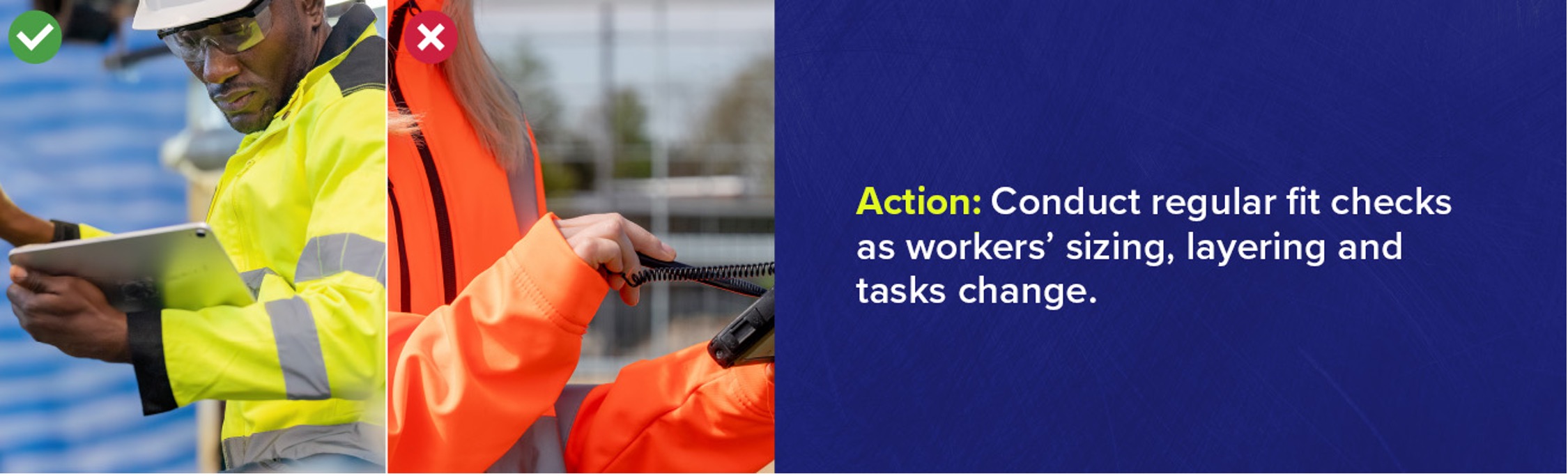
Action: Conduct regular fit checks as workers’ sizing, layering and tasks change.
Daily inspections support your safety culture
Encouraging your team to regularly inspect their workwear can help you spot the signs of PPE failure before they become hazards. Your daily safety briefings are an opportunity for employees to check their gear in real time before the work even begins.
Having trouble fitting daily maintenance into your schedule?
Managing PPE failure means more time you need to spend ordering, restocking and redistributing to the team, but it doesn’t have to.
A managed workwear program like Cintas Apparel+ provides on-time, weekly delivery with industrial laundry service. This means you don’t have to think about repairs, maintenance, size changes or replacement of your damaged workwear. Cintas handles it all, so your team can stay focused on the real work.
Spot the Worker™ Tip:
Learn more about how a Cintas Apparel+ program can support your PPE maintenance.
Pursuant to federal and provincial Occupational Health and Safety legislation, an employer bears sole responsibility for selecting the type(s) of personal protective equipment (PPE) to be used by its employees. All purchasers of PPE, AR/FR/Visibility garments and/or laundering services from Cintas bear full responsibility for selecting the PPE appropriate for use by their employees. Cintas makes no representation, warranty, or covenant with respect to the flame resistant, retroreflective and fluorescent qualities of the garments and/or PPE or with respect to their fitness or suitability for any particular use or purpose. The purchase of any goods or service from Cintas is subject to Cintas’ Standard Terms and Conditions and/or any other applicable written contract executed between the purchaser and Cintas relating to such purchase.